
the first law of ecology is that everything is related to everything else.
Showing posts with label climate. Show all posts
Showing posts with label climate. Show all posts
Monday
Climate change mitigation project threatens local ecosystem resilience in Ethiopia

Wednesday
Climate change dials down Atlantic Ocean heating system
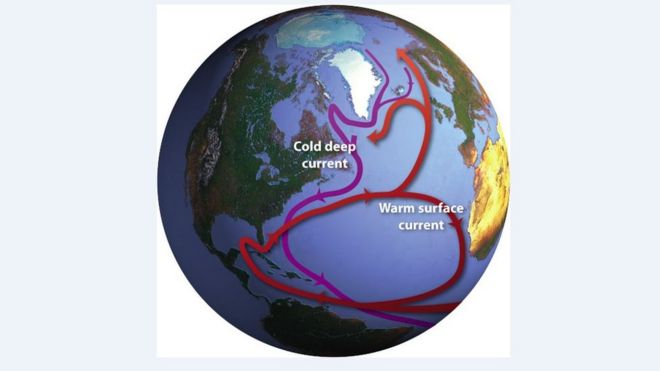 The circulation system plays a "significant role" in regulating the Earth's climate by distributing heat around the globe.
A significant shift in the system of ocean currents that helps keep parts of Europe warm could send temperatures in the UK lower, scientists have found.
Climate change and recreational activities at Walden Pond have altered its ecosystem
Planktonic microfossils in core sediments indicate anthropogenic impact over the past 1,800 years
- April 4, 2018
- PLOS
- Climate change and recreational activity at Walden Pond may have altered the ecology of this iconic lake during the past 1,800 years, affecting the water quality and plankton community, according to a new study.
 Climate change and recreational activities at Walden Pond may have drastically altered its ecosystem.Credit: Curt Stager
Tuesday
Global warming can turn monarch butterflies' favorite food into poison

Two monarch butterflies, reared by Matthew Faldyn, feeding on a benchtop in the Elderd Lab at the LSU Department of Biological Sciences.
Credit: LSU
Monday
Alberta's boreal forest could be dramatically altered by 2100 due to climate change
Model by UAlberta biologists predicts big changes due to climate change and wildfire
- March 26, 2018
- University of Alberta
- Half of Alberta's upland boreal forest is likely to disappear over the next century due to climate change, a new study shows. The upland forest will be replaced after wildfire by open woodland or grassland, according to research from biologists.
- Half of Alberta's upland boreal forest is likely to disappear over the next century due to climate change, a new study shows.
Tuesday
Climate change could imperil half of plant and animal species in the world’s most naturally rich areas
DATE:March 13, 2018
Up to half of plant and animal species in the world’s most naturally rich areas—including the Amazon and the Galápagos—could face extinction by the turn of the century due to climate change if carbon emissions continue to rise unchecked.
A new study examines various climate change scenarios—from 4.5°C rise in global mean temperatures if we don’t cut emissions to a 2°C rise if we meet the upper limit for temperature set in the Paris Agreement—and their impact on nearly 80,000 plant and animal species in 35 of the world’s most diverse and naturally wildlife-rich areas. Researchers selected each area for its uniqueness and the variety of plants and animals found there.
Subscribe to:
Posts (Atom)